

Description
About Sennelier
Founded in Paris in 1887, Sennelier has been crafting exceptional art materials for over 135 years. Trusted by legendary artists including Cézanne, Picasso, Monet, and Kandinsky, Sennelier maintains its commitment to quality and innovation. Made in France with unwavering attention to quality and performance.
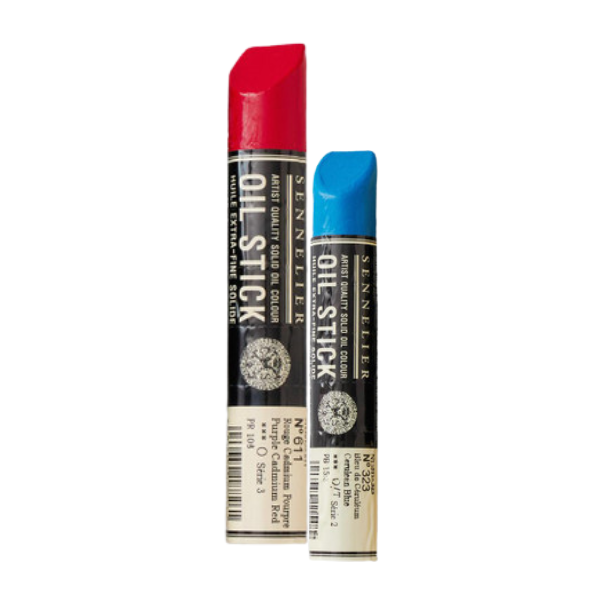
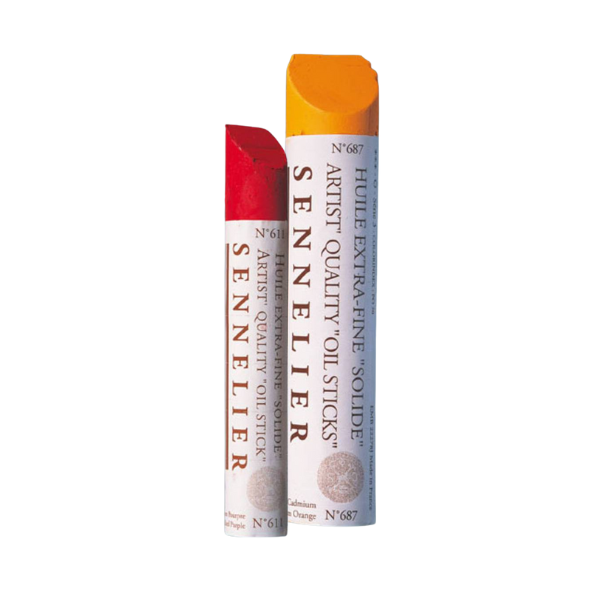
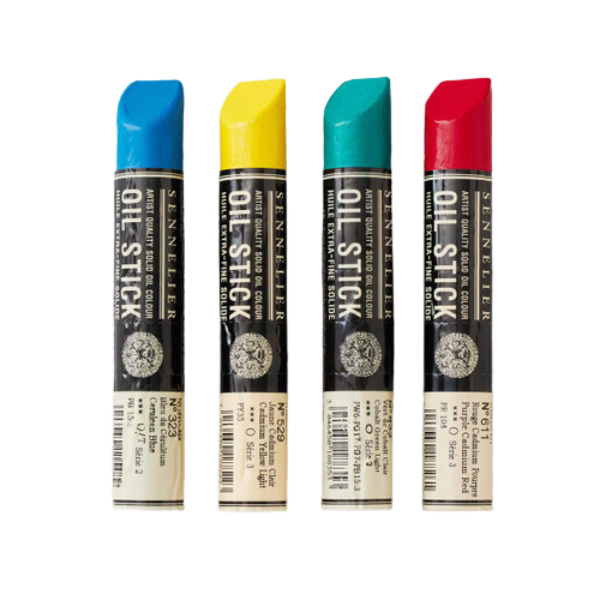
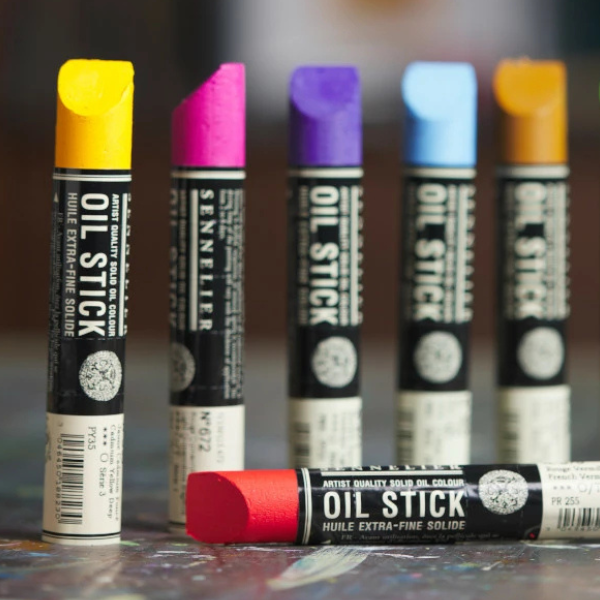
SENNELIER Extra Fine Solid Oil Sticks put true oil colour directly into your hand, offering a bold and tactile way to paint with oils. Designed for artists who enjoy working intuitively and physically with colour, these professional oil sticks combine the richness of traditional oil paint with the immediacy of direct application. Think oil painting, but with fewer barriers between you and the surface.
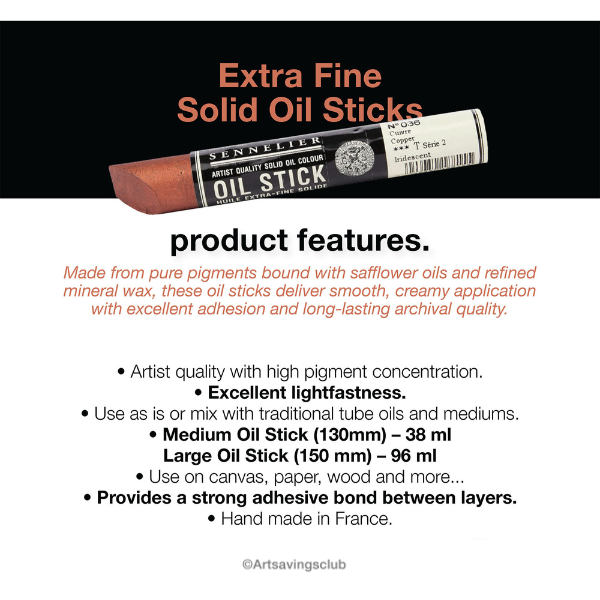
Formulated using pure, high quality pigments, SENNELIER Extra Fine Solid Oil Sticks deliver excellent colour strength, permanence and lightfastness. The pigments are bound with carefully selected safflower oils, chosen specifically for their resistance to yellowing over time, ensuring long term stability and archival quality. A refined mineral wax gives the sticks their solid form while maintaining a creamy, smooth consistency that glides effortlessly across the surface.
SENNELIER’s long standing expertise with oil pastels played a key role in developing this range, resulting in oil sticks that feel luxurious to use while behaving like true oil paint once applied. Although their size and shape are similar to Sennelier Le Grande oil pastels, the composition is entirely different, with performance firmly rooted in traditional oil painting principles.
These oil sticks can be used on their own or alongside tube oil colours, making them ideal for complete paintings or for combining drawing, painting and mark making in a single work. They are suitable for all traditional oil painting supports, including primed canvas, wood panels and fine art paper, provided the surface has been properly prepared with acrylic gesso or oil ground.
Before use, the thin protective skin that forms on the surface of the oil stick should be peeled away. This film naturally reforms after a few days of non use, helping to preserve the colour. Oil sticks should be applied in thin layers of no more than 1 mm. Once applied, they can be worked over with additional oil stick, oil paint, brushes or palette knives, and can be diluted with turpentine or mineral spirits if required. A colourless Oil Stick Medium is also available for creating transparent effects and glazes.
Drying time is typically between two and five days, depending on atmospheric conditions. As with traditional oil paint, varnishing should only take place after six months, once the paint film has fully cured. A soft brush is recommended for varnishing to avoid disturbing the oil stick marks. Colours are classified as opaque or transparent depending on the pigment used, and the sticks remain stable during storage as long as they are kept away from heat.
Sennelier Artist Oil Sticks combine the richness of traditional oil paint with the convenience of a drawing medium. Created in 1949 in response to Pablo Picasso’s request for a paint that could be applied directly to any surface, these oil sticks have become essential for contemporary artists seeking expressive, gestural techniques.
Each stick is made from high-quality pigments bound with safflower oil and natural waxes, creating a soft, creamy texture that glides smoothly across surfaces whilst maintaining the intensity and permanence of traditional oils.
Series Explained:
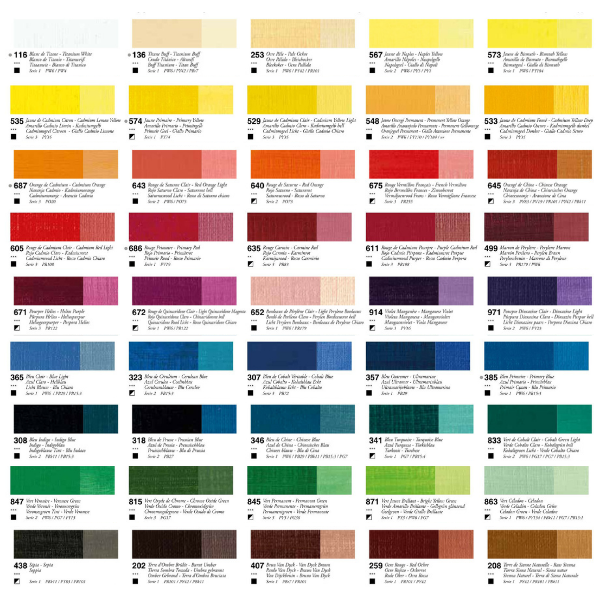
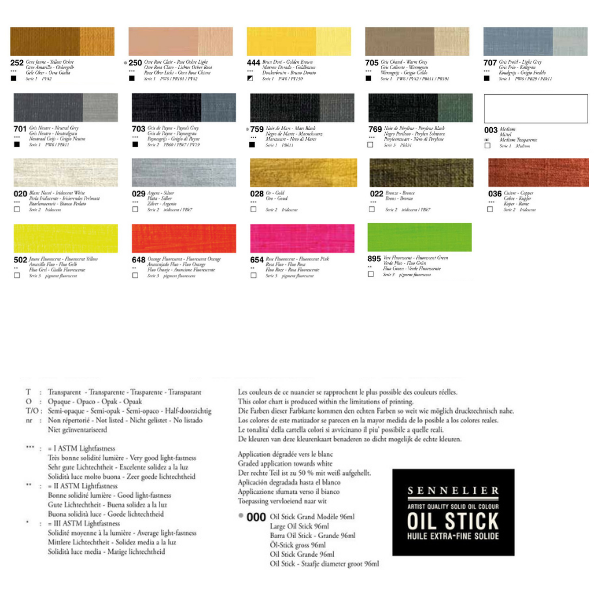
Series 1: Classic colours with excellent lightfastness. Includes essential whites, earth tones, and a wide range of primary and secondary colours.
Series 2: Premium colours featuring special effect pigments including metallics (bronze, gold, silver, copper) and unique formulations.
Series 3:Professional-grade colours made with rare pigments including cadmiums and neon colours for intense, vibrant hues.
How to Use:
1. Peel back approximately 1cm of the protective wrapper to expose fresh paint.
2. Apply directly to your primed surface (canvas, paper, wood).
3. Blend with fingers, cloth, or tools whilst wet.
4. Layer colours or work wet-into-wet for soft blends.
5. Combine with traditional oil paints and mediums for extended techniques.
Surfaces and Compatibility
Works beautifully on primed canvas, oil painting paper, wood panels, and mixed media surfaces. Fully compatible with traditional oil paints, mediums, solvents, and varnishes.


Reviews
There are no reviews yet.