
Description
Set contents:
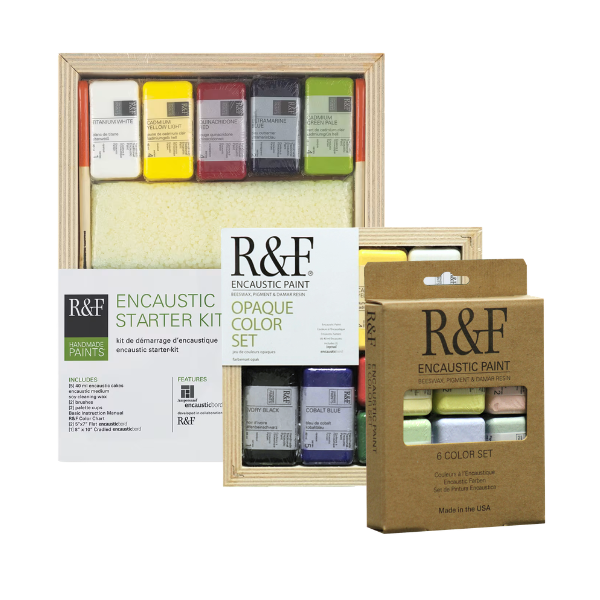
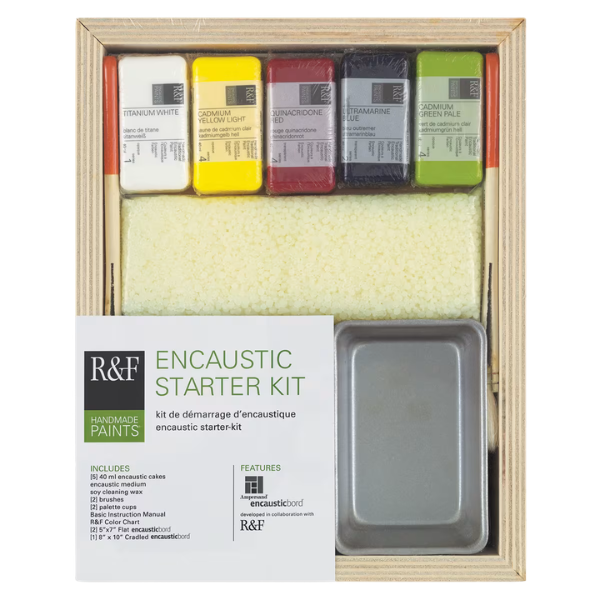
R&F Encaustic Paint – Starter Kit
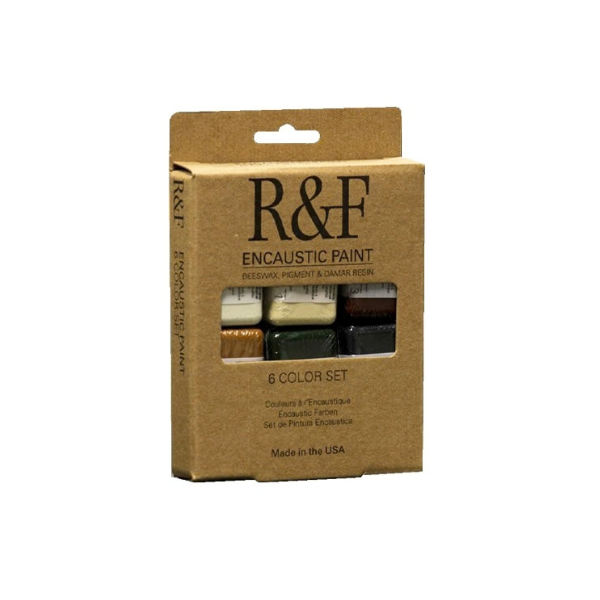
The Encaustic Starter Kit contains 5 x 40 ml. blocks + Ampersand Encausticboard™ panel.
- Colours: Cadmium Yellow Light, Cadmium Green Pale, Quinacridone Red, Titanium White, Ultramarine Blue.
- Ampersand Encausticbord™
- Small package of encaustic medium.
- Small package of soy wax.
- 2 palette cups.
- 2 brushes.
- R&F Color Chart.
- R&F Basic Encaustic Manual.
R&F Encaustic Paint – Opaque Colors
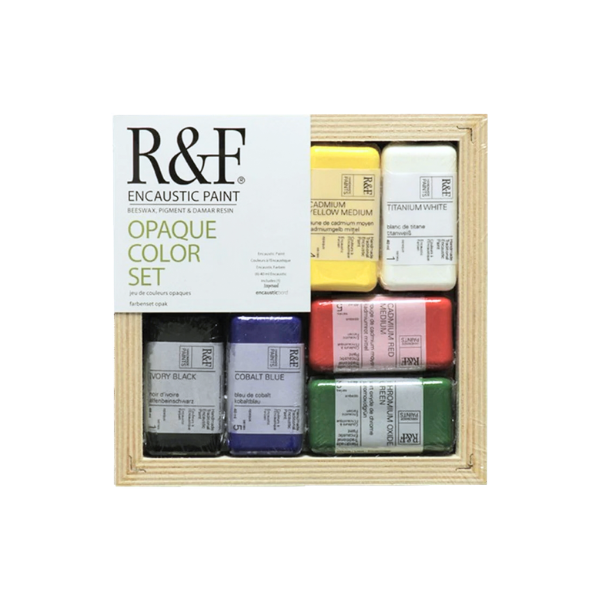
The Opaque Color Set features 6 x 40ml blocks + Ampersand’s cradled 6″ x 6″ Encausticboard™.
- Colours: Cadmium Yellow Medium, Cadmium Red Medium, Chromium Oxide Green, Cobalt Blue, Titanium White, Ivory Black.
- Ampersand’s cradled 6″ x 6″ Encausticboard™.
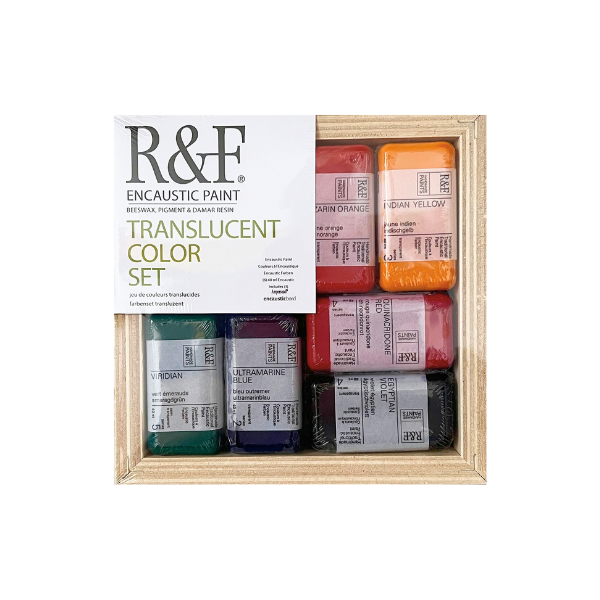
R&F Encaustic Paint – Translucent Colors
The Opaque Color Set features 6 x 40ml blocks + Ampersand’s cradled 6″ x 6″ Encausticboard™.
- Colours: Alizarin Orange, Quinacridone Red, Egyptian Violet, Indian Yellow, Viridian, Ultramarine Blue.
- Ampersand’s cradled 6″ x 6″ Encausticboard™.
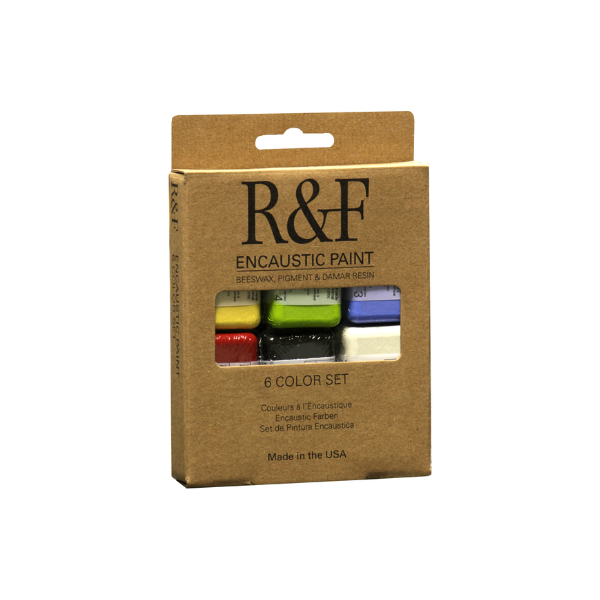
R&F Encaustic Paint – Introductory Colours
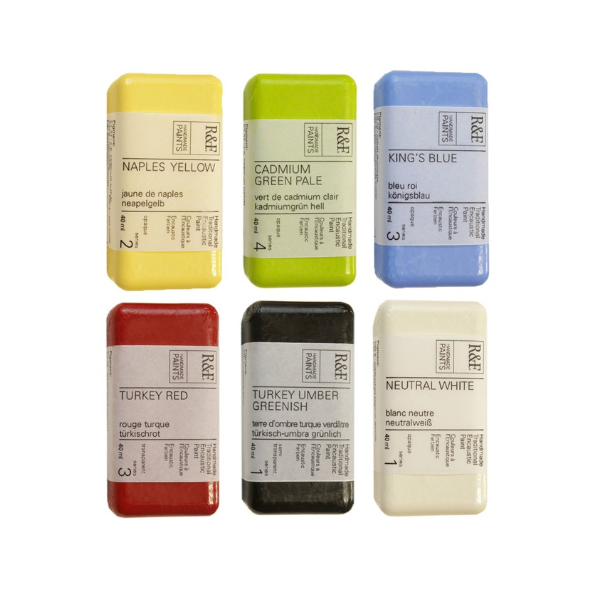
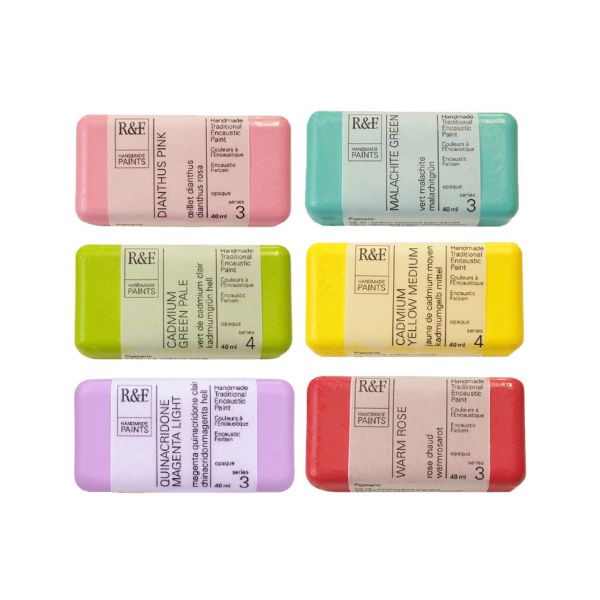
The Introductory set of 6 x 40ml blocks. Get started with this set of classic colors.
- Colours: Cadmium Green Pale, King’s Blue, Naples Yellow, Neutral White, Turkey Red, Turkey Umber Greenish.
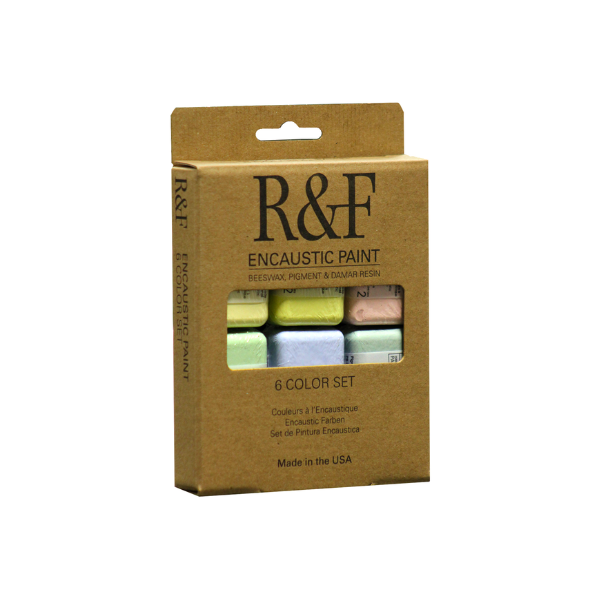
R&F Encaustic Paint – Chromatic Tones
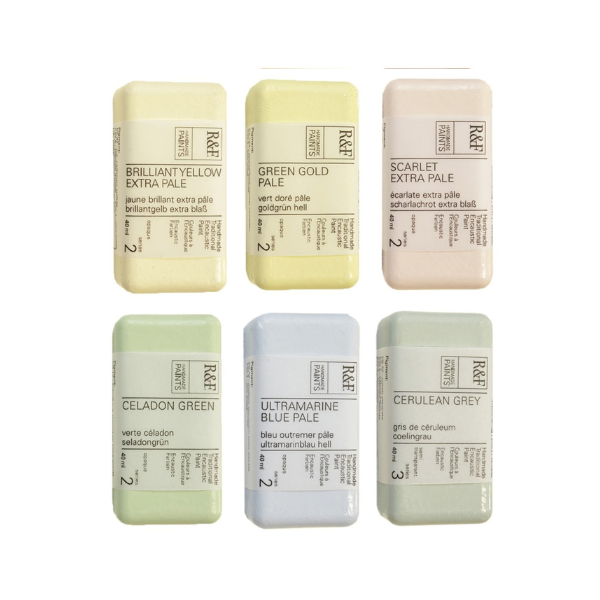
The Chromatic Tones Set of 6 x 40ml blocks, features a soft palette of six pale tones.
- Colours: Brilliant Yellow Extra Pale, Celadon Green, Cerulean Grey, Green Gold Pale, Scarlet Extra Pale, Ultramarine Blue Pale.
R&F Encaustic Paint – Earth Tones
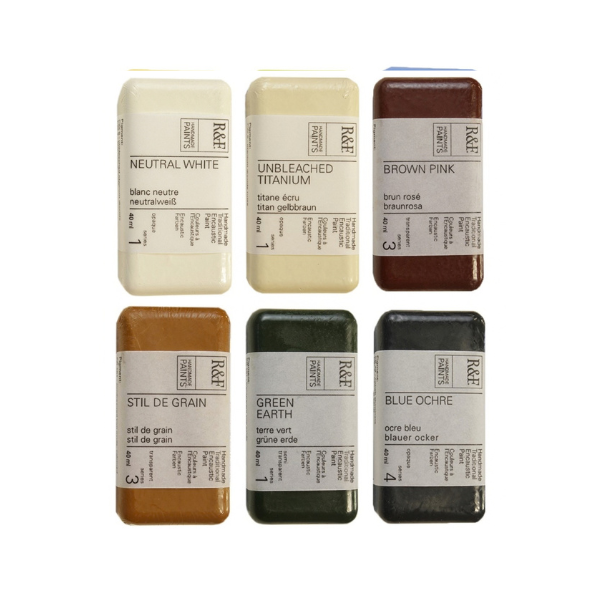
The Earth Tones Set includes 6 x 40 ml cakes that contains colors found in nature.
- Colours: Blue Ochre, Brown Pink, Green Earth, Neutral White, Stil de Grain, Unbleached Titanium.
About R&F Encaustic painting:
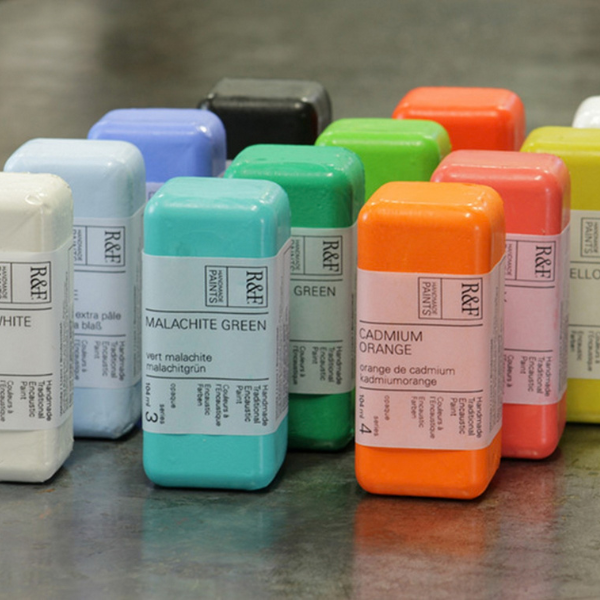
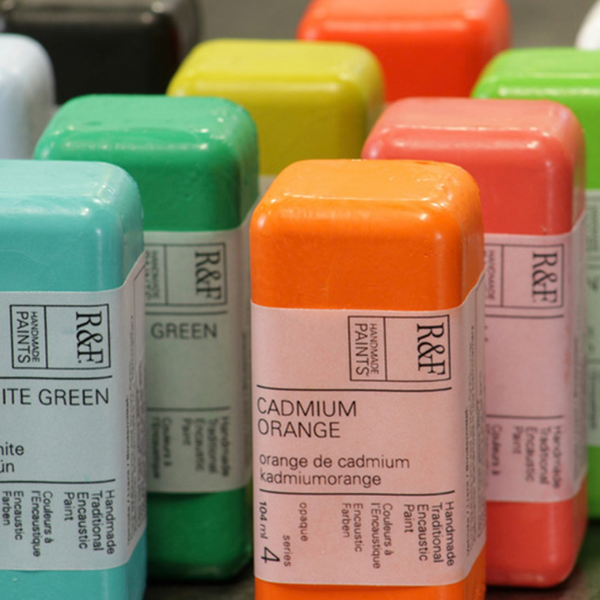
With a history extending back thousands of years, encaustic is one of the oldest painting techniques still actively explored by contemporary artists. R&F Encaustic Paint brings this historic medium into the modern studio in a professional, ready-made format combining beeswax, damar resin and carefully selected pigments.
Encaustic is worked differently from conventional liquid paint. The colour is first melted on a heated palette, applied while molten and then reheated to fuse it to the surface. This repeated process of applying and fusing allows individual layers of wax to become securely bonded while giving the artist considerable control over colour, transparency, texture and depth.
Its physical qualities make encaustic particularly suited to experimental mark-making. Smooth translucent passages can sit alongside heavily textured surfaces, while cooled layers can be scraped back, carved or incised to reveal previous colours. Wax can also be used to embed collage elements, build relief, create cast forms or combine painting with drawing, printmaking and sculptural techniques.
Because encaustic cools and solidifies almost immediately, artists do not need to wait for conventional drying between layers. At the same time, previously applied wax remains responsive to heat, allowing areas to be reheated, fused and reworked as the painting develops.
The finished wax surface possesses a distinctive depth and natural lustre. Once the painting has cooled, it can be gently buffed to enhance this lustre and bring additional saturation to the colours.
For best results, encaustic should be used on a rigid, absorbent and heat-resistant support and worked with appropriate temperature-controlled equipment. R&F recommends maintaining the heated palette at approximately 180–200°F (82–93°C), using natural-bristle brushes and providing adequate studio ventilation while the wax is heated.
From luminous layered paintings and intricate incised surfaces to collage, printmaking and sculptural applications, R&F Encaustic Paint offers artists an exceptionally versatile medium that combines an ancient painting tradition with the possibilities of contemporary art.
How to Use
- Melt the encaustic paint on a temperature-controlled heated palette and apply the molten colour to a rigid, absorbent and heat-resistant surface using a suitable natural-bristle brush or other encaustic tool. (Natural-bristle brushes are recommended for applying molten encaustic; synthetic brushes may melt when exposed to the required working temperatures).
- After applying each layer, gently reheat the surface using an appropriate fusing tool, such as a heat gun, so the wax bonds with the layer beneath it. Continue building, manipulating and fusing layers as required.
- Once cool, the surface may be left as is or gently buffed to enhance the natural lustre and colour saturation of the wax.
- Proper studio ventilation and careful temperature control are required when heating and working with encaustic.
Recommended Grounds & Surfaces
- Encaustic performs best on a rigid, absorbent and heat-resistant support. Raw wood and properly prepared wood panels can be used, while R&F recommends Ampersand Encausticbord as a purpose-made surface for encaustic painting.
- R&F Encaustic Gesso can also be used to prepare panels. Unlike conventional acrylic gesso, it is formulated with a higher proportion of solids to binder, creating the absorbent surface required for encaustic while retaining the adhesive qualities of an acrylic-based ground.
- Other suitable absorbent surfaces may include heavyweight paper mounted to a rigid panel, traditional rabbit-skin glue gesso and selected porous three-dimensional materials.
- Stretched canvas is not recommended as a primary support because its flexibility can contribute to cracking or separation of the wax layers.



Reviews
There are no reviews yet.